
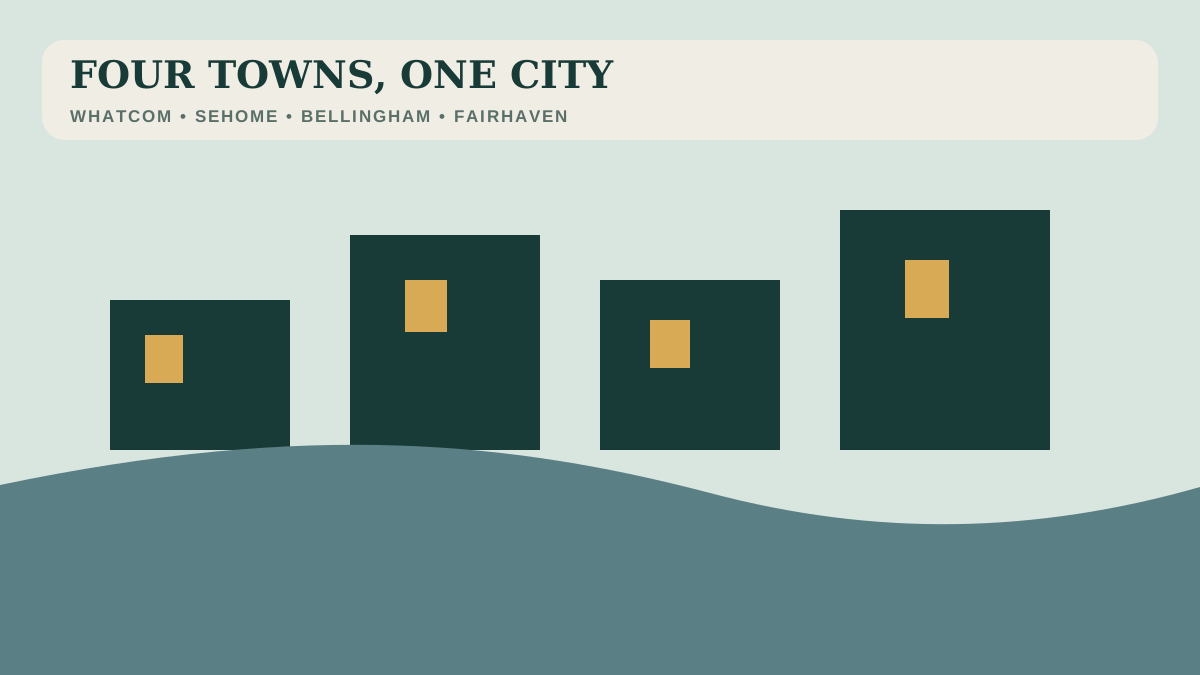
Bellingham did not simply radiate outward from one original downtown. Separate settlements grew around the bay and eventually consolidated, leaving behind multiple commercial centers and strong neighborhood identities. That origin explains why Fairhaven still feels like a town inside the city and why the waterfront story shifts block by block.
The bay created several opportunities at once
Mills, coal, shipping, rail and land speculation encouraged different settlements to form at useful points around Bellingham Bay. No single community automatically controlled the future, so growth came with rivalry and competing visions.
That pattern is visible in older maps and in the surviving historic districts. The modern city's shape is partly the fossil record of those early ambitions.
Whatcom and Sehome grew around resource industries
Early communities near Whatcom Creek and Sehome were closely tied to mills, coal and maritime access. Industrial opportunity brought workers and investment but also tied the towns to economic cycles.
Later downtown development absorbed and reshaped many of these areas, but older streets and institutions preserve pieces of the earlier geography.
Fairhaven tried to become a major transportation city
Fairhaven's boosters imagined a significant railroad and port future. The district's substantial brick buildings reflect that period of confidence and investment even though every prediction did not come true.
That history is why Fairhaven's architecture feels unusually ambitious for a neighborhood of its current scale.
Consolidation was practical, not magical
The communities gradually combined, culminating in the early twentieth-century creation of modern Bellingham. Shared infrastructure and economic logic could accomplish what civic boosterism alone could not.
The merger did not erase local identity. People kept using older place names and continued to experience districts differently.
The old rivalry became a modern tourism advantage
Today the multiple centers give Bellingham variety. A visitor can spend a morning in historic Fairhaven, an afternoon downtown and evening on a different part of the waterfront without feeling like the same blocks repeated.
LocalBellingham can use that story as a framework across the entire site, turning history into a practical way to navigate the city.
Make it current
Use the live calendar before you lock in the day. A festival, home game, museum program, concert or road closure can change the best version of this plan.
